Precise Relief for Problem Veins Ultrasound-Guided Sclerotherapy
- Home
- Treatments
- Ultrasound-Guided Sclerotherapy
🩺 What is Ultrasound-Guided Sclerotherapy?
Ultrasound-Guided Sclerotherapy (UGS) is a minimally invasive treatment used to treat deeper varicose veins or venous insufficiency that are not visible on the skin surface. It combines the power of medical imaging with sclerotherapy, a procedure that involves injecting a sclerosant solution into damaged veins to close them off.

✅ Benefits of Ultrasound-Guided Sclerotherapy
🎯 High Precision – Treats veins that cannot be seen without imaging
🕓 Quick Recovery – Return to daily activities the same day
🔄 Repeatable – Can be used on multiple veins over time
💪 Effective Relief – Improves symptoms like aching, heaviness, and swelling
👣 No Downtime – Minimal discomfort and no stitches or scars
⚙️ How the Procedure Works
Ultrasound Mapping
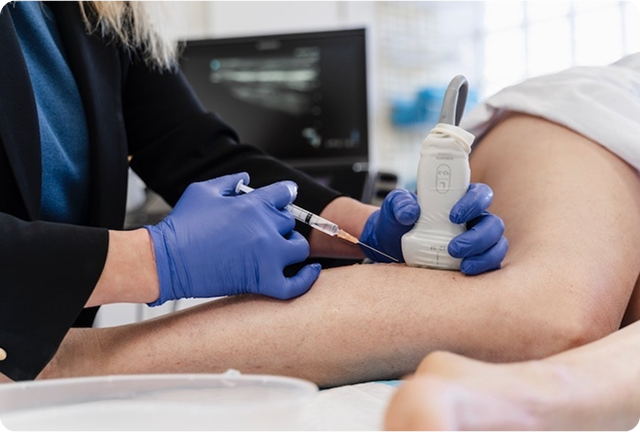
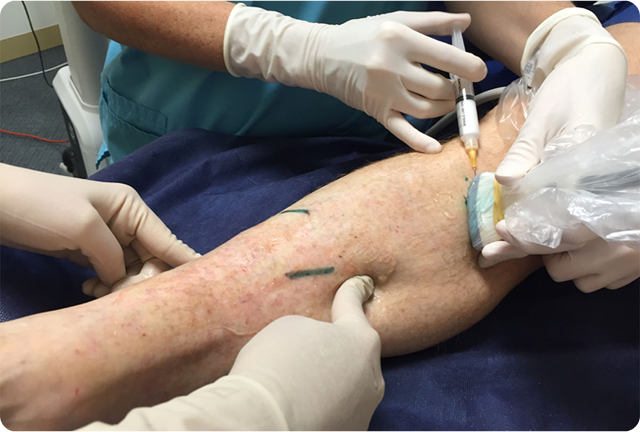
Your provider uses a handheld ultrasound device to locate diseased veins.
Precise Injection
A tiny needle is used to inject a sclerosant into the targeted vein while monitored via real-time imaging.
Vein Closure
The solution causes the vein to collapse and seal shut. Blood naturally reroutes to healthy veins.
Compression & Aftercare
A compression stocking may be applied, and walking is encouraged immediately after the procedure.
🧑⚕️ What to Expect After Treatment
Mild bruising, swelling, or tenderness at the treated area is normal and usually resolves within a few days. Compression stockings may be recommended for optimal results and to support healing.
- You may feel mild tightness or bruising
- Wear compression stockings for 5–7 days as advised
- Walk regularly to promote healing
- Avoid heavy lifting or prolonged standing for the first week
- Visible improvement often appears within 2–4 weeks
🧬 How Ultrasound-Guided Sclerotherapy Works — In Depth
Unlike traditional surface sclerotherapy used for spider veins, UGS allows specialists to locate and treat malfunctioning veins hidden beneath the skin — especially those connected to visible varicose veins or causing venous reflux. These veins often contribute to symptoms like:
- Aching or throbbing pain in the legs
- Swelling around the ankles and calves
- Fatigue or heaviness that worsens with standing
- Skin discoloration or itchiness
- Night cramps or restlessness

🔬 What is Injected?
Foamed sclerosant may be used for better contact with the vein walls, especially in larger or tortuous veins. This foam-based technique improves coverage and reduces the amount of medication needed.
🔁 Repeatable and Complementary
UGS can be used:
- Alone as a primary treatment
- Before or after procedures like radiofrequency ablation or VenaSeal
- In multiple sessions to treat extensive vein networks over time
- In maintenance care if new varicose veins appear later
Contact Information
Say something to start a live chat!
- (469) 846-8346
- (469) 409-0001
- assist@veinclinicofdallas.com
- 3051 Churchill Dr, Suite 116, Flower Mound, TX 75022