VenaSeal Closure (Medical Adhesive Treatment)
Gentle, non-thermal relief for varicose veins — with no risk of nerve injury.
- Home
- Treatments
- VenaSeal
💡 What Is VenaSeal?
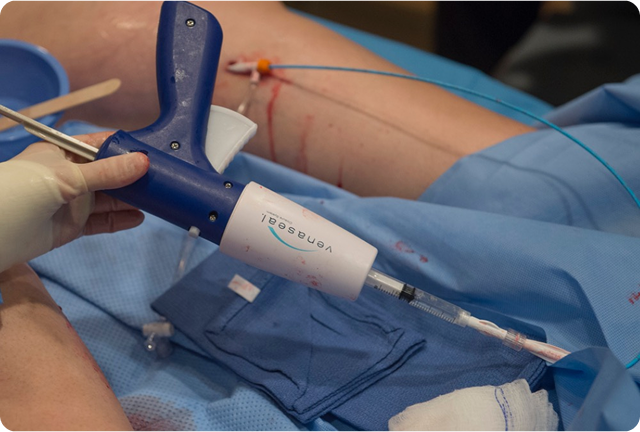
VenaSeal is a non-thermal, non-tumescent, and minimally invasive treatment for chronic venous insufficiency (CVI), the condition that causes varicose veins. Instead of using heat or stripping, VenaSeal uses a medical adhesive to gently seal the malfunctioning vein, relieving pressure and improving circulation.
Once closed, the treated vein is gradually absorbed by the body while blood reroutes to healthy nearby veins.
When Is VenaSeal Recommended?
✔️ When ultrasound confirms venous reflux in the great saphenous vein, small saphenous vein, or accessory veins
✔️ For patients with symptoms like heaviness, aching, swelling, or visible varicose veins
✔️ Ideal for patients who want to avoid thermal procedures, multiple needle sticks, or post-procedure compression
How VenaSeal Works
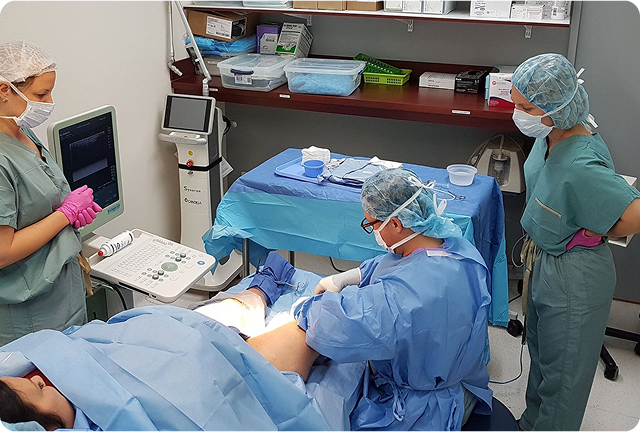
✔️ Performed under ultrasound guidance for precise targeting
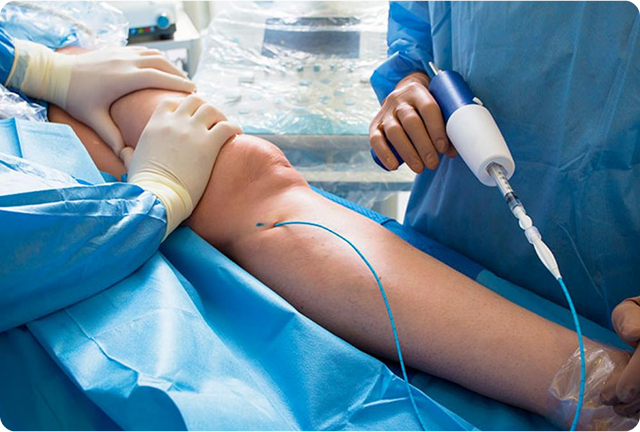
✔️ A tiny catheter is inserted into the vein through a single entry point
✔️ A small amount of medical adhesive is delivered at key points along the malfunctioning vein
✔️ The adhesive gently seals the vein closed
✔️ Blood reroutes to healthy nearby veins
✔️ No heat, no tumescent anesthesia, and no nerve injury risk
Benefits of VenaSeal
✔️ No thermal energy — no risk of heat-related nerve injury
✔️ No tumescent anesthesia — just a single numbed entry point
✔️ No compression stockings required afterward
✔️ Walk-in, walk-out procedure with zero downtime
✔️ Gentle, effective relief from leg pain, swelling, heaviness, and varicose veins
✔️ Ideal for those with low pain tolerance or needle sensitivity
✔️ Rarely, allergic reactions to the adhesive occur — extremely uncommon, and we screen carefully to ensure you’re a safe candidate
Is VenaSeal Safe?
Yes — VenaSeal has an excellent safety profile.
Unlike thermal procedures (like RFA), VenaSeal poses no risk of nerve injury. Most patients experience little to no discomfort during or after the procedure.
Mild bruising or tenderness is rare and temporary. As with all vein procedures, there’s a very small risk of blood clots, which we take every precaution to prevent — including follow-up ultrasound to ensure optimal healing.
Allergies to the adhesive are exceedingly rare, and we screen thoroughly to confirm candidacy before recommending VenaSeal.
Is VenaSeal Covered by Insurance?
Sometimes. VenaSeal is FDA-approved, but not all insurance plans cover it — even when medically necessary.
If not covered, we’ll discuss other excellent options that are fully insurance-approved. You’ll never be pressured, and you’ll always know your choices in advance.
Our team handles all prior authorizations and insurance communications for you.
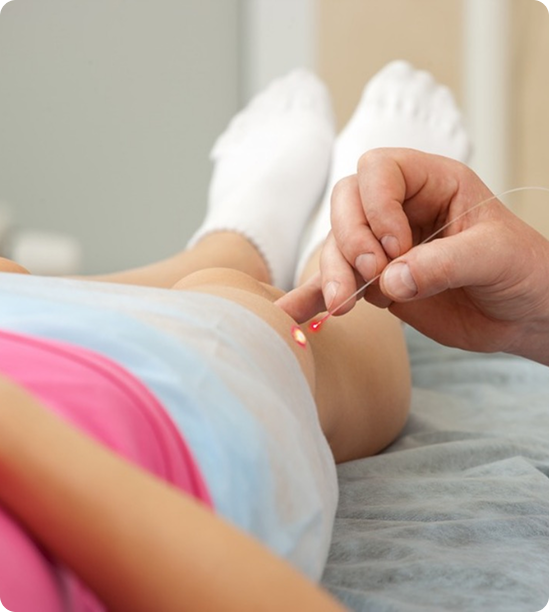
Why Choose The Vein Clinic of Dallas?
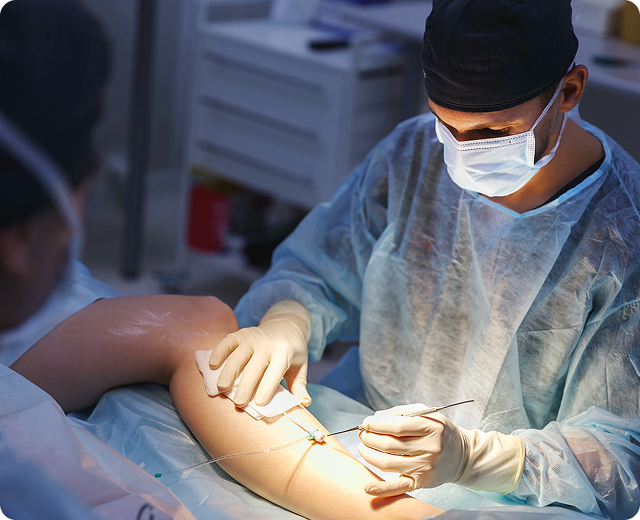
✔️ All VenaSeal procedures are personally performed by Dr. Husein Poonawala, ensuring expert, precise care from start to finish
✔️ Gentle, precise care using advanced diagnostics: comprehensive duplex ultrasound, thermal vascular imaging, vein lights, and flow dynamics testing
✔️ No rushed visits, no assembly-line care
✔️ A true boutique experience — where vein care is elevated to its highest standard
✔️ Trusted by patients across North Texas
Frequently Asked Questions
Does VenaSeal hurt?
Most patients describe VenaSeal as virtually painless, thanks to its gentle adhesive-based approach and minimal needle use.
How soon can I return to normal activity after VenaSeal?
Immediately. VenaSeal requires no downtime, and patients can resume daily activity the same day.
Is VenaSeal permanent?
Yes. Once the treated vein is sealed, it is permanently closed. However, new veins can develop over time, which is why follow-up is important.
Is VenaSeal covered by insurance?
Sometimes. VenaSeal is FDA-approved, but not all insurance plans cover it. Our team will verify your coverage and explain your options before any treatment begins.
What are the side effects of VenaSeal?
Side effects are uncommon. Mild bruising or tenderness may occur temporarily. Allergic reactions to the adhesive are extremely rare, and we screen all patients carefully to ensure candidacy.
Contact Information
Say something to start a live chat!
- (469) 846-8346
- (469) 409-0001
- assist@veinclinicofdallas.com
- 3051 Churchill Dr, Suite 116, Flower Mound, TX 75022